In the very beginning of this series of articles dedicated to Istanbul, I have mentioned my going there was accompanied by accumulated fatigue, both physical and emotional that had almost postponed it. However, one trip, in every sense and aspect, is a universal recipe for coping with difficulties; no matter how hard to execute it seems to you, I am prescribing it, as the professionals will do in their turn. The key lies not in the sudden effect, do not expect your campaign to solve your problems for you. It, however, gives the advantage to tear away from your dependences and a chance to look at things from another perspective, enriched with useful new information. There is no development where there is no movement. The path is different for each of us in distance and time, and this is completely natural. Important is to walk along it and, even not always familiar of where you will be taken, to be sure that this is exactly your way.
Similarly, during those winter holidays, my path took me to the place that would subsequently turn out a surprise for me, the bigger as the unexpected. The cosmopolitism of the city greatly impressed me, a place rich in history and modern at the same time, with numerous monuments and cultures in synthesis. The spark, which warmed a nest in my heart for my interest, however, was the Sea of Istanbul. Sounds curious, but going there, I had no idea I was meeting a coastal city in its face. Actually, I had no expectations, neither preliminary agenda; nor at least I had chosen the destination on the sea ground. After the late cold evening on leaving and the long tiresome journey, the morning looked not so welcoming. The inevitable irritating procedures such as the tugging of luggage and hotel accommodating succeeded the excitement of seeing Istanbul… Meeting with the sea veiled my heart with warmth; a vital feeling, awakening the desire for life, driving away all that had been loaded. Light and moving like sea foam, I think this is the way all little mermaids feel.
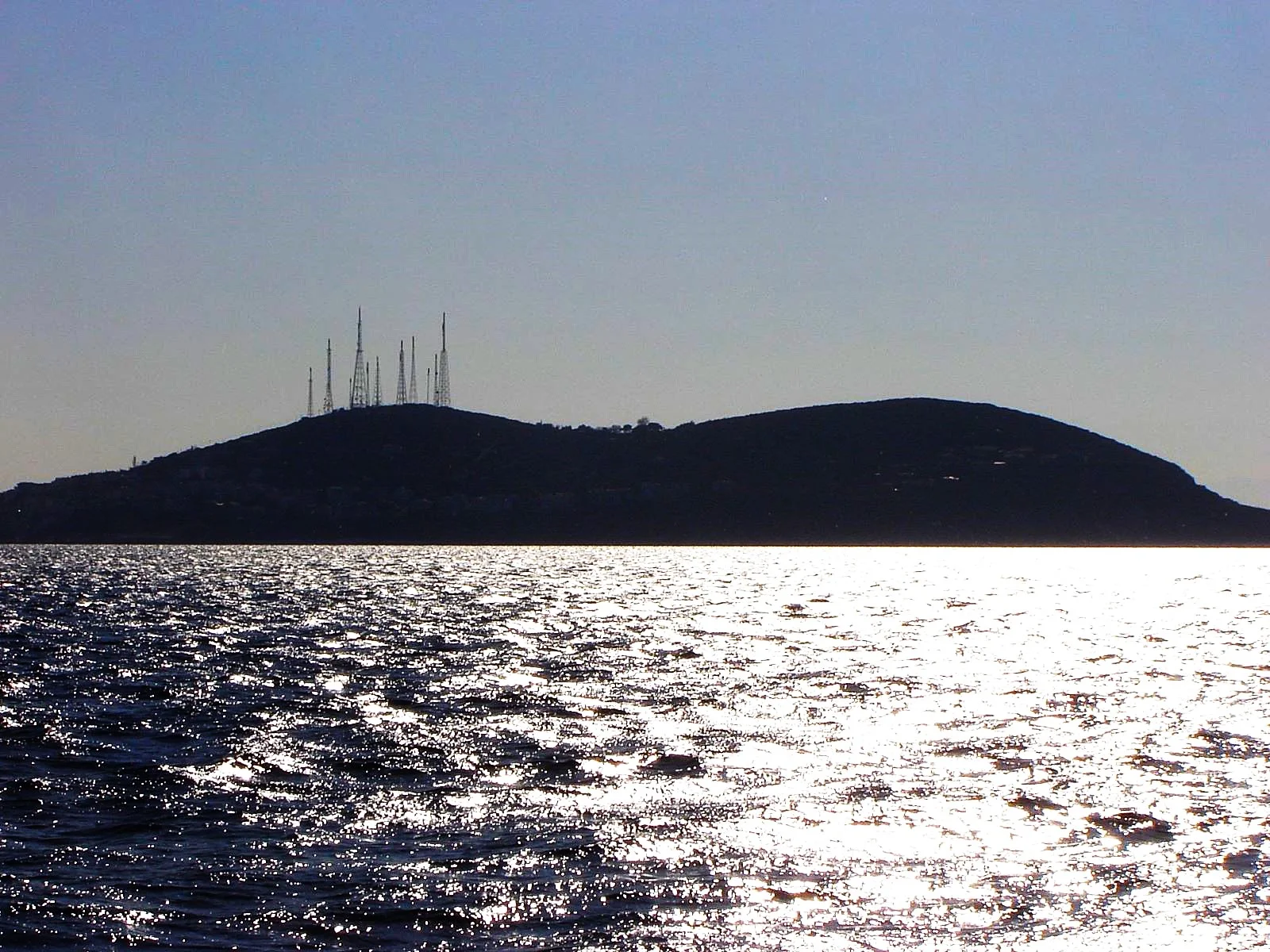
In the instant, I glimpsed Marmara Sea I assumed that it derived its name from its plain, silvery to milk coloured surface that very much resembled that material. It was the first picture that I captured its image in. Although I next discovered many of its other faces, in this first of them I remembered it forever, the Sea of Istanbul, peaceful and seemingly cold, yet attracting with its nobleness. They called it so after the name of its largest island at present, the one of Marmara. Of course, everything in nature turns into a single circle, and setting off from somewhere, you will inevitably find yourself at the same place again. My first idea about its name received a kind of confirmation in the fact that there were exactly such deposits of marble on this island. Well, while the scholar presents the truth literally, the poet perceives it via metaphors; thus the world is one and still versatile.
The patron of the sea is located in an island group in its western half. Visiting Istanbul, I had the chance to explore a bit of its eastern part, perhaps the most interesting one of all in that direction. I state this not by accident. The fact that namely here the waters of the sea seduce the giant in the face of the cosmopolitan city is glorious enough itself. The other argument is the group of geographical formations, interesting in their variety and important in location; both connecting and separating. First and most significant of them is the Bosporus, the strait, which merges two seas into one and divides the city that combines two continents in the equal basic parts in number. Istanbul colossus steps with one foot in Europe and in Asia with the other, facing the Marmara Sea with a back turned to the Black one. What matters all of them for the dimensions of such enormous creature?! The connection between them, the separated, boils without ceasing along vital arteries, the Bosporus and Fatih Sultan Mehmet bridges as well as through endless ferry services, drawing a complex network of geometric lines and curves.
Sounds curious, but there are less road connections built over the big strait than the ones over the Golden Horn inlet, the second formation in importance in the mentioned region. It separates the European part of Istanbul in the so called north and south ones. The latter is the oldest area within the boundaries of the today’s settlement. The glorious Constantinople itself has once ruled behind its numerous rings of fortification walls, the remains of which still stand. The place is concentrated with cultural monuments and I shall not be far away from truth to call it the heart of Istanbul. The other equally authentic, but still historically younger part of the city is located beyond it, across the Golden Horn, Ataturk and Galata bridges. Its center is the neighborhood with the famous eponymous Galata Tower, which heights reveal an unforgettable view over almost the entire metropolis and over the place in which the gulf, the strait and the same sea merge remarkably.
The third formation are the romantic Princes’ Islands. There are only two such groups in Marmara Sea as a whole, one in each of its two halves. Luckily, the east one is located close to Istanbul, off its Asian shores. Regular ferry lines and walks for tourists start both from there and from the European part of the city. The size of the group here and the islands themselves is smaller than in the western part, but they are more in number, nine of them. My visit and their fairy-tale atmosphere do not fade in my memory. Most of them are inhabited, but seasonally, as they are built with villas and summer houses of the local and foreign rich, hence are used for recreation mostly. The Bosporus possesses similar features, inwards along the coast in northern direction. Many of the sultans’ old palaces and those of the aristocracy are preserved there along with the expensive modern residences.
During my walk to the Islands, I could see beaches only there. The one of Kinaliada, the closest island to Istanbul, which I managed to examine well, was a stylized strip, covered with pebbles and most probably artificially laid in the part of the built-up area. The central city outlines, and mostly those around the remarkable water-gathering point, are formed as piers, embankments, coastal alleys and gardens, ports, shipyards, warehouses and industrial zones; logical for a large urban territory where traffic is intense enough and pollution is heavier. However, I suppose that there should be more beaches found on the Asian coast of the city around and to the west of the islands as well as upward along the strait.
My expectations are caused by two main reasons, which I take into account through the eyes of an avid swimmer mainly. Salinity of the water here is relatively low and, although Marmara Sea connects with both the Black and the Aegean ones, it is much closer to that of Black sea. I have not yet swum in 22 particles per mile, but, knowing the taste of the Black Sea and the Mediterranean, I definitely sympathize to the salinity of the first, because the difference between the numbers 18 and 38 in particles per mile is significant. The other reason is that the Marmara Sea is spared of strong streams; it is far calmer compared to the Black Sea, despite the fact that both are enclosed within the mainland. Of course, the floaters might have another opinion, but being a swimmer I embrace the news as good; at the same time an idea even occurs to me to start a survey of the summer resorts here.
[images]