Budva is the strongest attracting centre for tourist visits in its country, given its name to the entire surrounding coastline, and recognised not by chance as the “Miami of Montenegro” due to its popularity, beaches, crowds and roaring nightlife. The Budva Riviera itself occupies the central part of the Montenegrin Adriatic, spanning from Petrovac in the south-east near Lake Skadar and the border with the South Coast to the Bay of Kotor region in the north-west.
With its impressive Old Town, one of the most ancient settlements on the shores of the Adriatic Sea with a respectable 2500 years of existence, and with its intensive new development at the same time, Budva is an embodiment of the duality of the entire riviera and the Montenegrin coast in general. It attracts with its numerous spacious and sandy beaches, small towns with characteristic Mediterranean architecture, diverse and vibrant life, the beauty and positive features of its natural and historical characteristics. And, in spite of massive losses suffered in the past, the tourism in Montenegro has been reviving rapidly, attracting ever increasing interest.
Similar to Dubrovnik, Budva was found on a small island, linked with the mainland via a sandbank, around which current peninsula, but in an eastern direction in comparison to the Pearl of the Adriatic, it developed subsequently. In fact, the Old Town is the main historical landmark and still a generally intact core of this rapidly changing settlement, preserved itself behind its solid fortress walls amidst the massive modernisation surrounding it in close proximity with its buildings from the most recent times. Despite the dynamic, decorated with colourful flags and a stage for carnival performances, it is open with all its five gates to the multitudes of visitors, flowing into its narrow streets in unceasing streams from and toward the main promenade beside the walls, the only one taking and navigating the entire tourist inflow.
While the nearby resorts such as Sveti Stefan and Milocer are well set for special guests and celebrities, this destination is widely available to the public. With bars and clubs in the bustling neighbourhood, abundantly equipped and loud-sounded beaches, it may be more attractive mainly to people who are eager to party or sleepless, or simply lovers of festivals, theatre programs and music events, which are organised here with abundance, rather than being suitable for a standard family vacation.
Another difference with the region of Dubrovnik is the lack of archipelagos (island groups) here, apart from a few more significant single islands in the shape of Sveti Nikola just opposite Budva and the silhouette of Sveti Stefan also in the visible vicinity. On the flip side, the place compensates completely with a respectable number of beaches, about 35, most of them wide spanning, predominantly rocky, yet at the same time, with a satisfying presence of sandy ones, a luxury considering the nature of the environment, three whole of which belong to the town-adjacent island. Eight have been awarded the Blue Flag, further recognition and pride for the Budva Riviera.
For the most part, the beaches stretch to the east along the length of the new town, however, in the opposite direction are the worthy of special attention, Trsteno with the finest sand and clearest water, as well as the famous Jaz, which holds a prize for popularity as the venue chosen by world star musicians for their concerts. Budva’s most popular beach, Mogren is also sandy, sheltered by the Old Town walls and stretching beyond its boundaries in the west to the cape named after it.
The town beach of Budva, Slovenska is covered with pebbles, but sufficiently large and accessible, underlined with history and sited by the sandy one of Becici, honoured as the most beautiful and well-equipped along the entire southern Adriatic coast. Both are directly interconnected through a tunnel in the Zavala Peninsula, which physically separates them together with their adjacent settlements. At its eastern end, the latter merges with the pebbled one of Rafailovici. The other sixteen up to Sveti Stefan are a series of smaller beaches, including Kamenovo, Przno and Milocer, one in-between the capes of the same names, the other next to the old Royal Family Residence and Kraljicina Beach.
Budva is among the warmest towns in the Adriatic region, with a typical Mediterranean climate of warm summers and mild winters, with the highest and lowest temperatures in the months of July and January. The average temperature throughout the season, from the beginning of April to the end of October here, unlike Croatia, are welcoming for beneficial sun-bathing and swimming, with the summer water being 24-25 degrees, and 18-19 in the autumn. Salinity is the typical of 38 per mille. Visiting Budva in May, I only had the chance to water my feet and hands, and with pleasure, I would like to do in full height, horizontal position and dolphin strokes, if I was to be prepared with the necessary swimsuit; may it be the next time.
[images] ??
This is an edited version of the original article from 2010. Circumstances and facts may have changed. Follow up for more travel guides from the series:
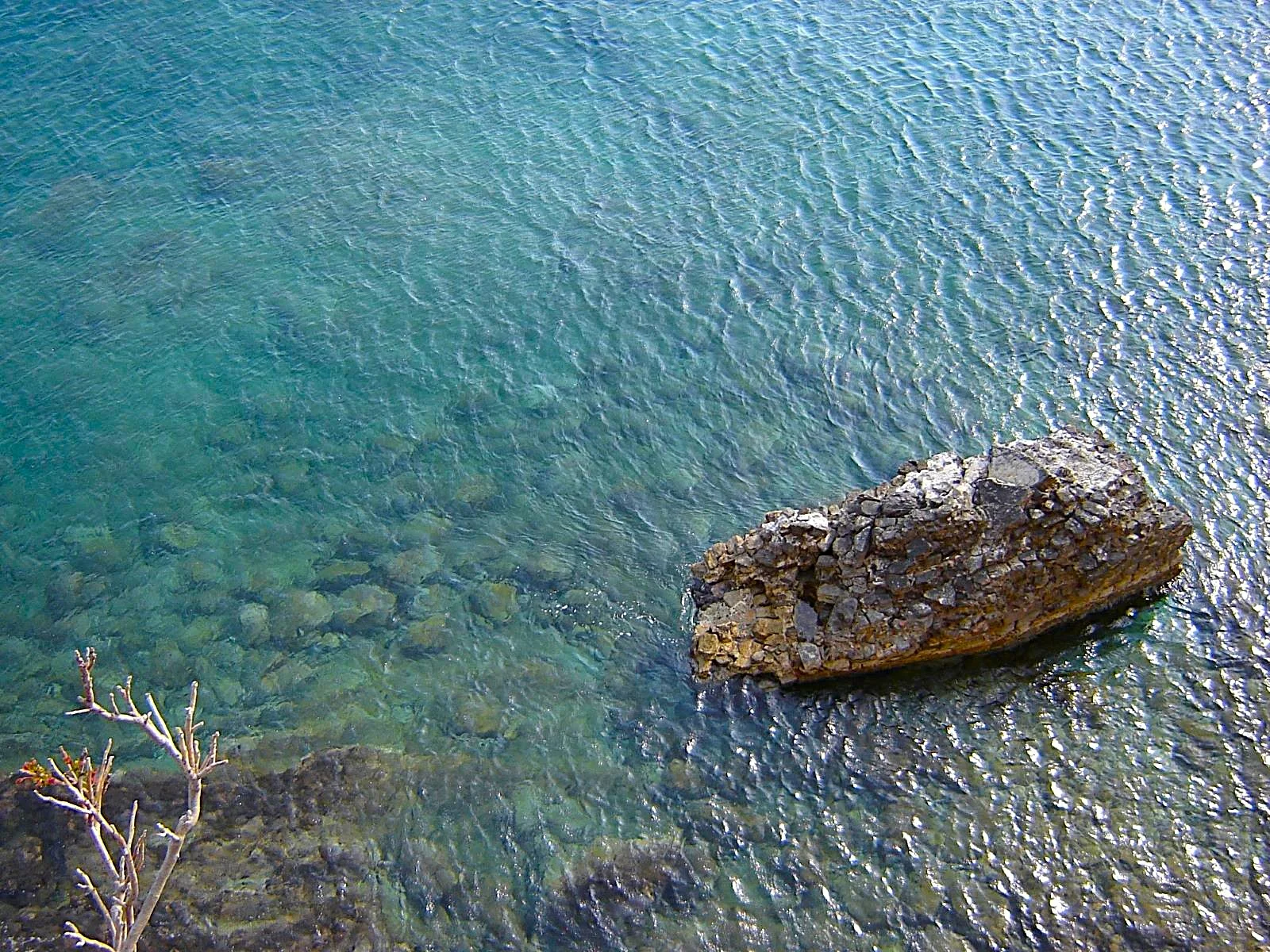
Budva: Adriatic Sea
Order Travel Photography Prints with Ocean and Historical Architecture Themes: